
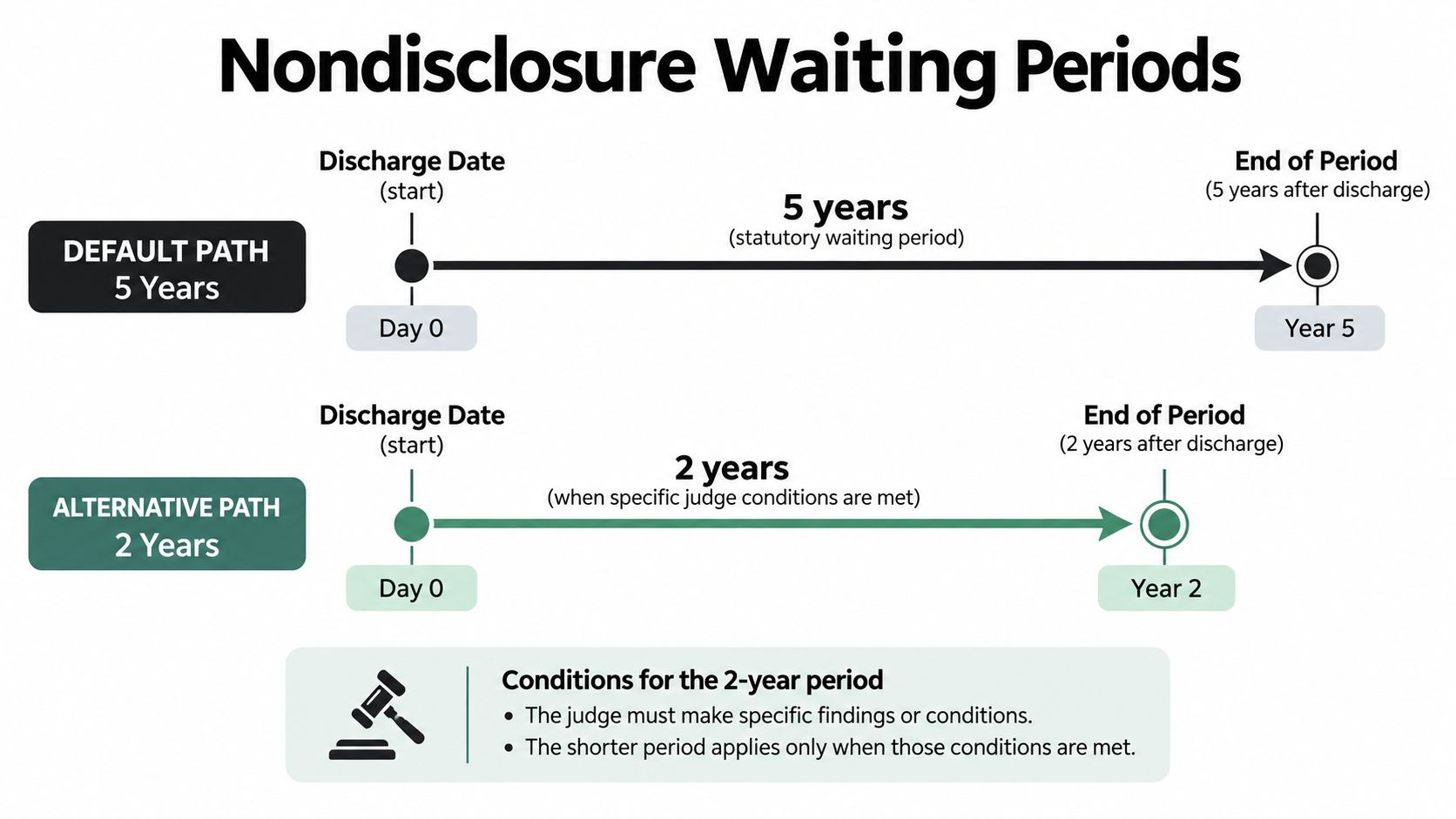
A first DWI may qualify for nondisclosure after two years from the completion of community supervision if the court required an ignition interlock for at least six months. Without that qualifying interlock condition, the waiting period is five years from the date supervision ended, not from the arrest.
A DWI arrest can be overwhelming, but you don't have to face it alone. You may have finished probation, paid what the court required, and still worry that the old case will follow you into every job application, apartment screening, insurance review, or professional licensing decision.
The answer depends on more than counting calendar years. You need to identify the correct discharge date, confirm the interlock condition, reconcile the judgment with probation records, and investigate whether an accident or another disqualifying fact appears in the file. This is a date-calculation problem and a document-review problem, not an automatic benefit that begins when probation ends.
A First DWI and the Road to a Clean Record
Consider a common Houston situation. A delivery driver in his early thirties completed community supervision, paid the financial obligations connected to his case, and kept working. His probation officer told him the case was closed. Months later, a background check still showed the DWI, and he wanted to know whether the arrest would ever stop affecting his life.
The answer starts with the way the case ended. A typical first DWI case may move through an arrest, bond, a plea or trial, community-supervision conditions, possible ignition-interlock use, and a formal discharge. Only after the sentence and supervision requirements are completed can the statutory waiting period become relevant under Texas Government Code §411.0731.
That sequence matters because people often count from the wrong event. The installation date of an interlock device isn't automatically the starting point. Neither is the arrest, the plea, the conviction, or the date you paid a particular fine. The practical starting point is the completion of community supervision, subject to the statute's other requirements.
The case becomes a calendar problem
Your file should answer several basic questions:
- What was the discharge date? Find the formal order or other official proof showing when community supervision ended.
- What did the court order about an interlock? Confirm whether the judgment or supervision terms required an ignition-interlock device for at least six months.
- Did you complete every condition? Review fines, court costs, restitution, treatment, classes, reporting, and any other court-ordered terms.
- Did the case involve an accident? A collision involving another person, including a passenger in your vehicle, can create a statutory barrier even when nobody suffered an injury.
- Does your record contain another qualifying offense? A prior intoxication-related matter, commercial-driver issue, or other statutory exclusion may change the analysis.
A public DWI record can create practical problems even after you've completed every court requirement. Nondisclosure can provide a path toward limiting public access, but only if the petition is filed at the right time and the record supports eligibility.
What Nondisclosure Means in Texas
Suppose you finished probation, paid the court costs, and are ready to pay a filing fee. Before you do, confirm what an order of nondisclosure will and will not accomplish. It limits public access to a qualifying criminal-history record. It does not destroy the record. Instead, the order directs the Texas Department of Public Safety and other criminal-justice agencies to withhold covered information from ordinary public access.
That result differs from expunction. Expunction can destroy or remove qualifying records under the statute that applies to the case. Nondisclosure leaves the underlying conviction in existence while restricting public disclosure. The distinction matters when you apply for a professional license, seek work in a regulated field, or face another criminal case.
For a practical comparison of these remedies, including the details of an order of nondisclosure in Texas, review the guide Clearing a Texas DWI: Expunction and Nondisclosure. Do not ask only whether your record is “clean.” Ask who can still access it and what a particular application requires you to disclose.
Before filing, reconcile the records that control eligibility. Compare the judgment, supervision paperwork, discharge documentation, and any accident report. A motor-vehicle accident involving another person, including a passenger in your vehicle, can create a statutory barrier even when nobody was injured. That exclusion is easy to miss when the case file focuses only on the plea and probation terms.
Terms you should understand
BAC, or blood alcohol concentration, is the alcohol concentration measured through blood, breath, or urine analysis. Under Texas Penal Code §49.04, a first DWI is generally a Class B misdemeanor. It becomes a Class A misdemeanor when the State proves an alcohol concentration of 0.15 or more at the time of analysis. The statute also addresses an open container in the driver's immediate possession, which can affect the minimum confinement term. Review Texas Penal Code §49.04 and related DWI provisions alongside the charging and sentencing records.
Implied consent describes the legal framework under which a person who drives in Texas is treated as having agreed to provide a specimen in circumstances covered by law. Refusing a test can create an administrative license issue separate from the criminal DWI case.
A field sobriety test consists of roadside exercises officers may use while investigating suspected impairment. It is not a chemical test. The officer's observations, instructions, testing conditions, and interpretation of your performance can all matter to a defense.
An administrative license suspension, often called an ALR matter, is the driver's-license proceeding tied to an alleged refusal or failed specimen result. A DWI license suspension can affect driving privileges separately from the criminal case and from a later nondisclosure petition.
Texas Courts guidance on orders of nondisclosure is also available in the embedded overview below. Use it for general orientation, then rely on your own case documents and current law when deciding whether to file.
How the 411.0731 Waiting Period Is Calculated
For a qualifying first DWI conviction handled through community supervision, §411.0731 creates two practical waiting-period paths. The default is five years after discharge from community supervision. The shorter path is two years after discharge when the court required an ignition-interlock device for at least six months as a condition of supervision and you successfully complied with that condition.
The statute's focus is the end of supervision and the completion of the sentence. That means a person may have finished the driving portion of probation but still need to verify that all required fines, costs, restitution, and other obligations were satisfied. An unresolved obligation or delayed discharge can affect the date used in the calculation.
The Texas Courts petition instructions emphasize that the required period must have passed before filing. You should therefore calculate from the official discharge date, not from the date you remember completing a class or installing the device. The Texas DWI waiting-period timeline guide can help you organize the dates, but it can't replace a review of the judgment and supervision file.
Use the discharge date, not the arrest date
Suppose your community supervision discharge date was June 1, 2024, and the court required an ignition interlock for at least six months. If you successfully complied with that condition and all other requirements, the two-year waiting period reaches its end on June 1, 2026, based on the official Texas Courts guidance. A petition filed after the required period has ended may then be considered, assuming every other statutory requirement is satisfied.
Without the qualifying interlock condition, the applicable period is five years after supervision ends. The fact that you installed an interlock voluntarily doesn't necessarily create the shorter path. The key question is whether the court ordered the device as a condition of community supervision and whether you complied with the required period.
Use this checklist before treating a date as final:
- Locate the discharge document. Confirm the date community supervision ended.
- Read the judgment and probation terms. Look for the ignition-interlock requirement and its duration.
- Confirm completion. Verify payment of required fines, costs, and restitution, along with treatment or other conditions.
- Compare the records. Reconcile the judgment, probation file, county clerk records, and driving history.
- Set the filing date carefully. Don't file merely because the anniversary is approaching. Confirm that the statutory period has ended.
The statute is narrower than a general record-sealing rule. The Texas Government Code provision for this nondisclosure route should be read alongside the current case record. For information about when Texas requires an ignition-interlock device as a driving condition, see Ignition Interlock Devices in Texas DWI Cases.
Statutory Disqualifiers and Hidden Exceptions
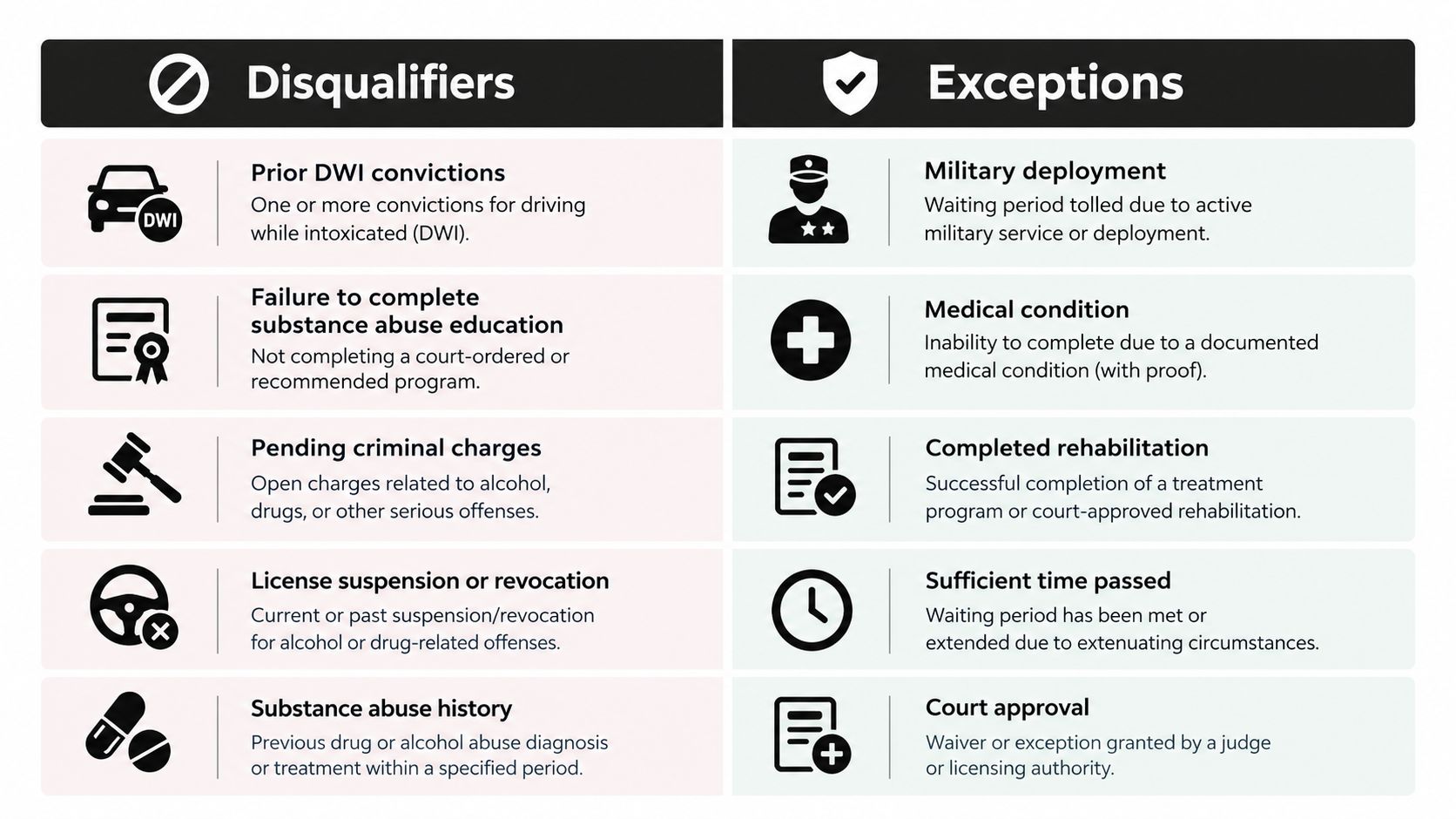
Finishing probation doesn't guarantee an order of nondisclosure. Section 411.0731 applies only to a qualifying first DWI and contains restrictions that can defeat an otherwise promising petition.
The motor-vehicle accident exclusion deserves special attention. Texas Courts materials explain that a person is ineligible when the offense resulted in a motor-vehicle accident involving another person, including a passenger in the applicant's own vehicle. No injury is required for this issue to matter. A low-speed collision, a property-damage crash, or a passenger-related incident can require careful review before you spend money preparing and filing a petition.
Reconcile the accident records
Start with the documents, not your memory of how the collision felt. Compare the crash report, probable-cause affidavit, plea paperwork, judgment, and any language used during the criminal proceeding.
- Check the crash report: Determine whether it identifies another person involved in the collision.
- Review the charging file: Look for facts connecting the DWI offense to the accident.
- Compare the judgment: Generic wording may not tell the whole story.
- Resolve discrepancies: Ask counsel to evaluate conflicting descriptions before filing.
Other statutory problems can include a prior conviction or prior deferred-adjudication community supervision for another intoxication-related motor-vehicle offense, a case involving a commercial driver's license, and failure to complete court-ordered terms. The statute also matters because the qualifying discharge or dismissal and the completed sentence must fit the specific route.
A CDL, or commercial driver's license, creates a separate concern for professional drivers. A personal DWI case can affect a commercial driving record and may not be resolved just because a criminal-history search later becomes restricted. If your job depends on driving, review both the criminal file and the driving record.
The Texas Courts overview identifies the accident rule and the difference between public access and statutory access. Read the official Texas Courts nondisclosure overview before assuming that a clean post-conviction history guarantees eligibility.
A dismissed charge or a prior matter that doesn't fall within the statute's exclusions may require a different analysis. Don't self-screen by asking only whether this was your first DWI. Ask whether the exact offense, disposition, driving status, accident history, and supervision record satisfy §411.0731.
Filing the Petition and What Courts Need From You
Nondisclosure isn't automatic. After the waiting period ends, an eligible person must file a petition and give the court enough reliable information to evaluate the request. The judge still reviews statutory eligibility and the record. Reaching the correct date is necessary, but it isn't the final order.
Begin with a document folder. Put the following records together before completing forms or paying filing costs:
- Order of discharge: Obtain official proof showing when community supervision ended.
- Certified judgment: Confirm the offense, sentence, court-ordered conditions, and disposition.
- Supervision records: Verify completion of reporting, treatment, interlock, payment, and other conditions.
- Driving history: Review the DPS record for license issues, commercial status, and inconsistencies.
- Case file: Obtain crash reports, affidavits, plea papers, and documents that may address an accident.
A careful filing sequence
First, compare the discharge date with the applicable waiting period. Next, confirm the interlock condition from the court's records rather than relying on an installation receipt alone. Then review the accident exclusion, prior qualifying offenses, commercial-driver status, and all sentence obligations.
The petition should identify the statutory basis and present accurate facts. The court may require notice to the appropriate government parties, and those parties can review the record. If your paperwork is incomplete or the petition is filed too early, the court may not grant relief even though you completed supervision successfully.
You also need to distinguish an ALR matter from the nondisclosure proceeding. An ALR hearing addresses the administrative license consequences connected to the arrest. A nondisclosure petition addresses public access to a qualifying criminal-history record after the criminal case and supervision have been completed. One doesn't automatically resolve the other.
What happens after filing
The court reviews the petition, supporting records, and any response from the notified parties. A lawyer can identify missing discharge language, clarify an interlock requirement, and address a collision record before the hearing rather than leaving the judge to find the problem first.
Don't promise yourself a particular result based only on an online eligibility calculator. The relevant statute, the exact case history, and the current court records control. A Texas DWI attorney should review the full file before advising you to file.
What Life Looks Like After the Order Is Granted
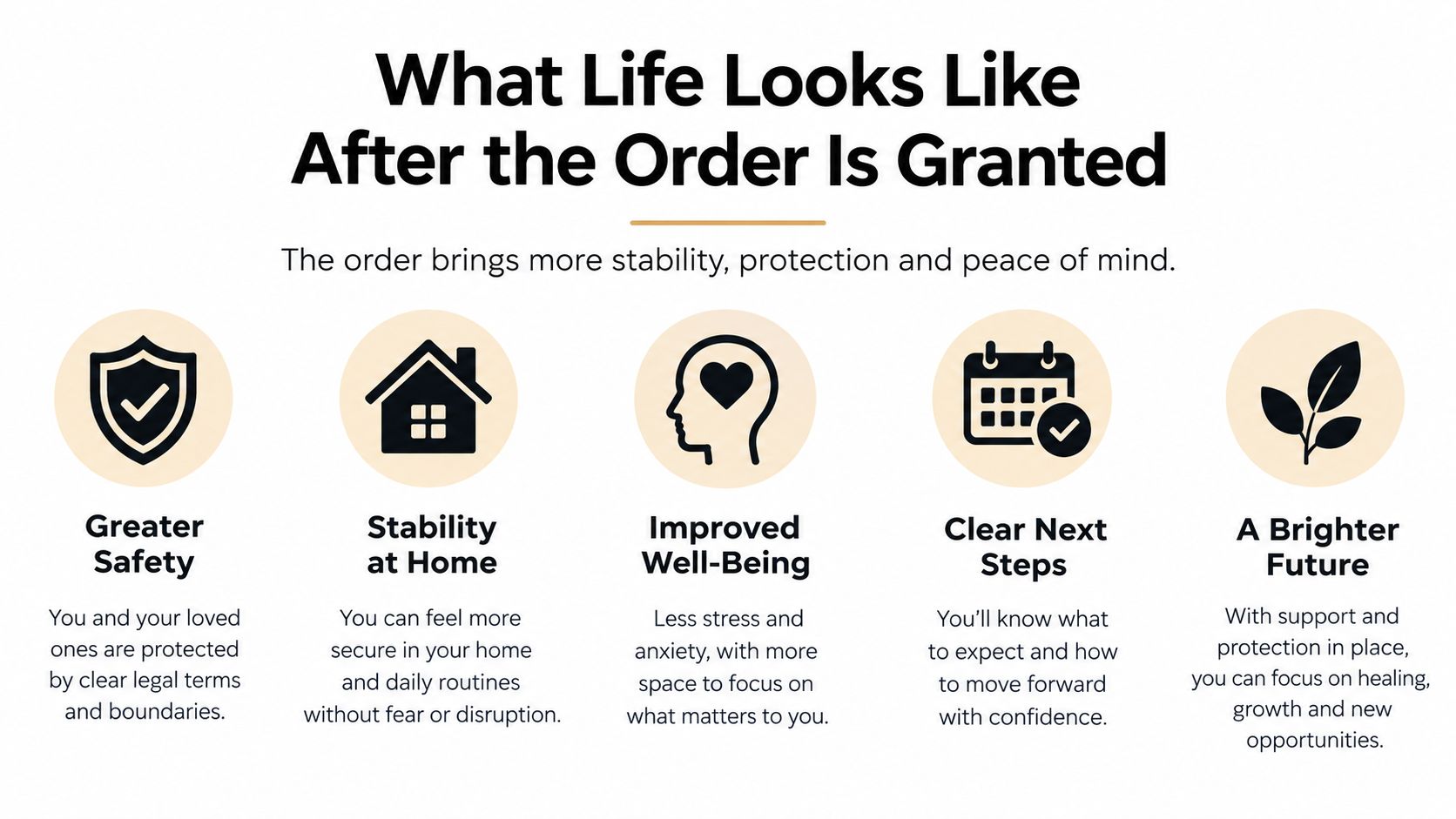
A successful order of nondisclosure can change what appears in an ordinary public criminal-history search. For a person applying for housing or a non-regulated job, that restriction may reduce the chance that the old conviction appears in the same way it did before the order.
It doesn't mean every agency sees a blank record. Criminal-justice agencies, courts, prosecutors, and certain licensing or governmental entities may retain access under statutory exceptions. A professional licensing board may have authority that an ordinary private employer doesn't, so you should ask a lawyer how to answer a specific application instead of assuming that every question has the same response.
A practical post-order example
Imagine a discharged first-offense client who receives an order after satisfying the applicable waiting period. The client may still need to preserve the order and provide it when a government or licensing agency asks for records. The client also shouldn't describe the result as an expunction, because the conviction was restricted from public access rather than destroyed.
A later DWI can create a separate legal problem. Nondisclosure doesn't turn the original conviction into an event that never happened for every future purpose, and it doesn't guarantee that a later prosecution can't consider the prior case under applicable enhancement rules.
For a focused explanation of the practical effect of sealing, review Texas DWI record sealing. Keep copies of the petition, order, discharge documents, and any notice sent to agencies. Those records help you explain exactly what relief the court granted.
Next Steps and How a Texas DWI Lawyer Can Help
Start with the calendar, but don't stop there. After the relevant supervision anniversary, collect your discharge order, certified judgment, probation records, and DPS driving history. Then compare the documents for the four issues that most often change the answer: the true discharge date, the court-ordered interlock condition, completed financial obligations, and any accident involving another person.
You should also review whether the case qualifies for nondisclosure rather than expunction. A conviction generally points toward nondisclosure analysis, while a case that ended differently may require a separate review under another record-clearing statute. Don't assume that a later remedy is available without examining the disposition and the full criminal history.
A lawyer's job is to test the petition before the court does. A Houston DWI lawyer can review the judgment, supervision order, crash records, CDL information, prior intoxication-related history, and DPS record. A Texas DUI attorney can also separate the criminal case from an ALR matter, explain any DWI license suspension, and identify defense issues involving the field sobriety test, probable cause, or chemical testing.
The Law Office of Bryan Fagan, PLLC offers free consultations and case evaluations for Texans dealing with DWI charges and related record-clearing questions. Bring your discharge paperwork and the records you have, so the legal team can help determine whether your first DWI in Texas is ready for a §411.0731 petition and what steps may help you fight DWI Texas consequences.
If you're ready to stop guessing at the date, contact the Law Office of Bryan Fagan, PLLC for a free consultation and a focused review of your nondisclosure eligibility. A careful review now can uncover an incorrect discharge date, missing proof, or an accident issue before you spend money on a premature filing.
