
A DWI arrest can be overwhelming, but you don't have to face it alone. If the court has just entered a conviction, you may be worried about jail, fines, your license, and whether you still have a way to challenge what happened. The appeal bond after a Texas DWI conviction is often the immediate issue, because a missed filing deadline can affect whether an appellate court can review your case.
The rules depend on the court that entered the conviction and the type of case involved. A Houston DWI lawyer or another Texas DWI attorney can help identify the correct deadline, prepare the required bond, and address separate consequences such as a DWI license suspension.
What an Appeal Bond Does After a Texas DWI Conviction
An appeal bond, sometimes called a supersedeas bond, is a financial guarantee used to perfect an appeal. In plain language, it tells the court that you're asking an appellate court to review the conviction and that you'll appear as required. For a misdemeanor DWI conviction in a justice or municipal court, filing the compliant bond moves the case toward review in the proper appellate court.
The appeal bond is different from the bond you may have posted after your arrest. The original bail bond is designed to secure your release while the criminal case is pending. An appeal bond serves a later purpose. It preserves the appeal after judgment and can stop further proceedings in the originating court when the filing complies with Texas law. It isn't an informal request to delay punishment, and a general notice of appeal may not be enough by itself.
What the bond protects
Texas law generally provides for release on reasonable bail while a misdemeanor motion for new trial or appeal is pending. That does not mean every defendant automatically remains free under every condition. The court may consider the sentence, prior violations, nonappearance concerns, and other findings relevant to reasonable bail.
A felony DWI appeal follows stricter rules. Texas law bars release in specified felony cases when the punishment reaches the statutory 10-year threshold, while a defendant placed on 10 years of community supervision may still seek bail pending appeal. The details of the sentence matter, so you shouldn't assume that an appeal bond guarantees continued liberty.
Practical rule: Treat the appeal bond as a procedure for preserving appellate review, not as a universal stay of every consequence connected to the conviction.
The bond can preserve your opportunity to challenge issues such as probable cause, field-sobriety evidence, breath or blood testing, or trial errors. A field sobriety test is a series of roadside tasks an officer may use to assess coordination, balance, and eye movement. Those observations can become part of the record, but an appeal generally addresses legal errors shown through the trial record rather than starting the trial over.
The amount, deadline, approval process, and filing location require careful attention. The next question is usually the most urgent one: how much time remains.
The Ten-Day Deadline That Decides Your Appeal
For many Texas misdemeanor DWI appeals, the appeal bond generally must be filed within 10 days after the court renders sentence. Article 44.16 provides that the notice of appeal has no effect until the required bond has been given and approved. The municipal-court appeal statute also requires the bond no later than the 10th day after judgment, or, if you file a motion for new trial, within 10 days after that motion is overruled. See the Texas municipal-court appeal statute for the governing framework.
This deadline is jurisdictional. If the bond is filed late, the appellate court may lack jurisdiction and must send the case back to the original court for execution of the sentence. That result can occur even when the intended appeal raises substantial questions about the traffic stop, probable cause, testing, or trial procedure.
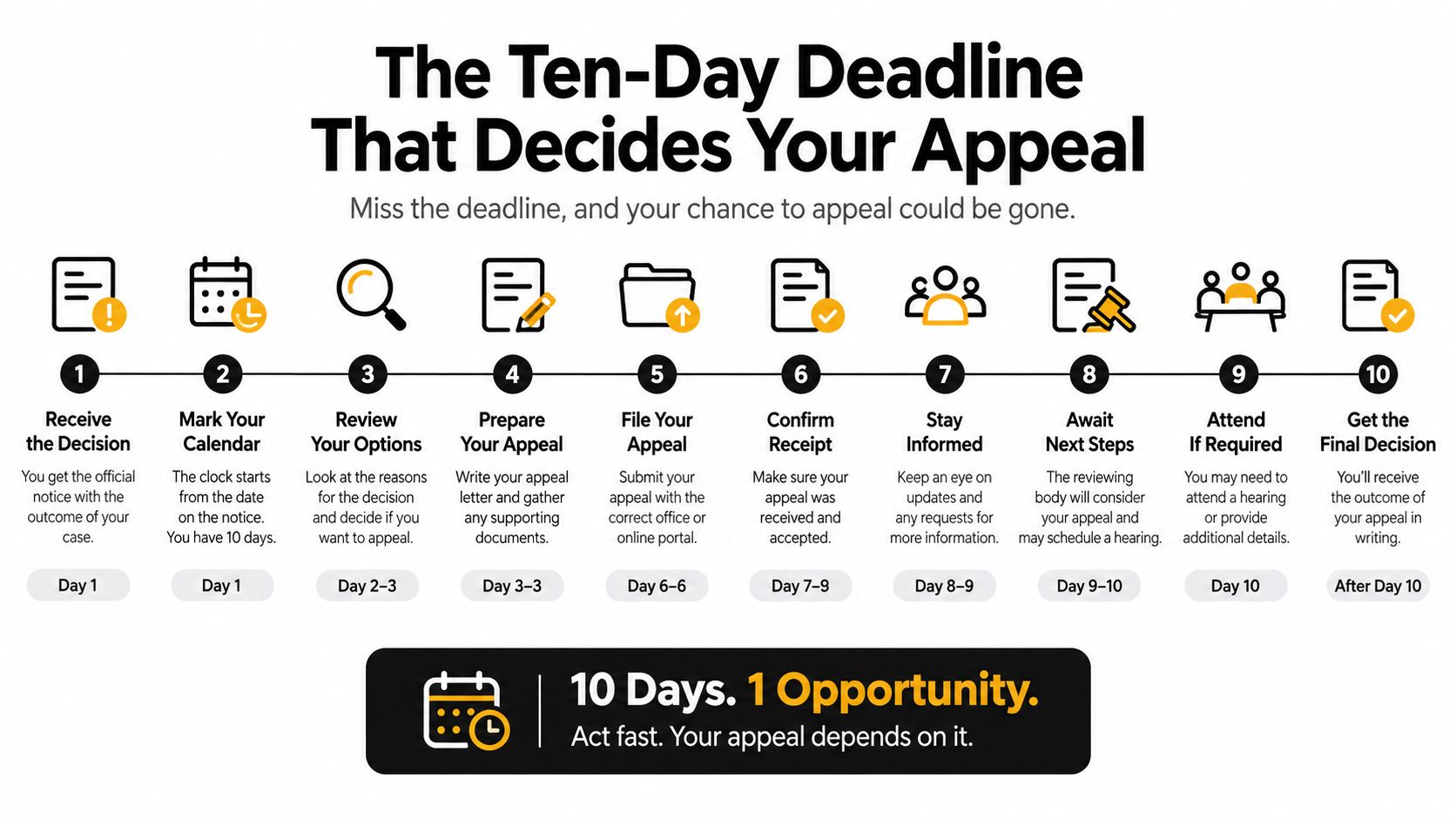
How the deadline works in practice
Suppose a municipal court renders sentence and you wait beyond the filing period before asking the clerk about an appeal bond. Filing the notice later may not repair the problem. If the required bond wasn't timely given and approved, the appellate court can be unable to reach the merits and can return the case for enforcement of the sentence.
A motion for new trial can change the calculation, but it doesn't make the deadline indefinite. If the motion is overruled, the applicable period runs from that ruling under the governing statute. Counsel must verify the judgment, the motion's status, and the court's filing rules rather than rely on a calendar estimate.
The court matters just as much. A conviction may come from a municipal court, justice court, county court, or district court, and the appellate route isn't identical in each setting. The Texas DWI appeal process should be evaluated from the signed judgment and the court's records, not from assumptions based on another person's case.
Write down the date sentence was rendered, ask whether a motion for new trial was filed, and confirm where the bond must be delivered. A lawyer should also preserve proof showing when the filing occurred. A receipt, file-stamped copy, or clerk confirmation can become important if the filing date is later disputed.
How Texas Courts Set the Appeal Bond Amount
In a justice or municipal court DWI appeal, the statutory minimum is the greater of twice the adjudged fine and court costs or $50. The amount is tied to the judgment, not a universal figure that applies to every Texas DWI case. Chapter 45A also requires the bond to be payable to the State of Texas and to identify the conviction and appeal. The Texas criminal procedure provisions governing appeal bonds should be read together with the judgment and the clerk's filing requirements.
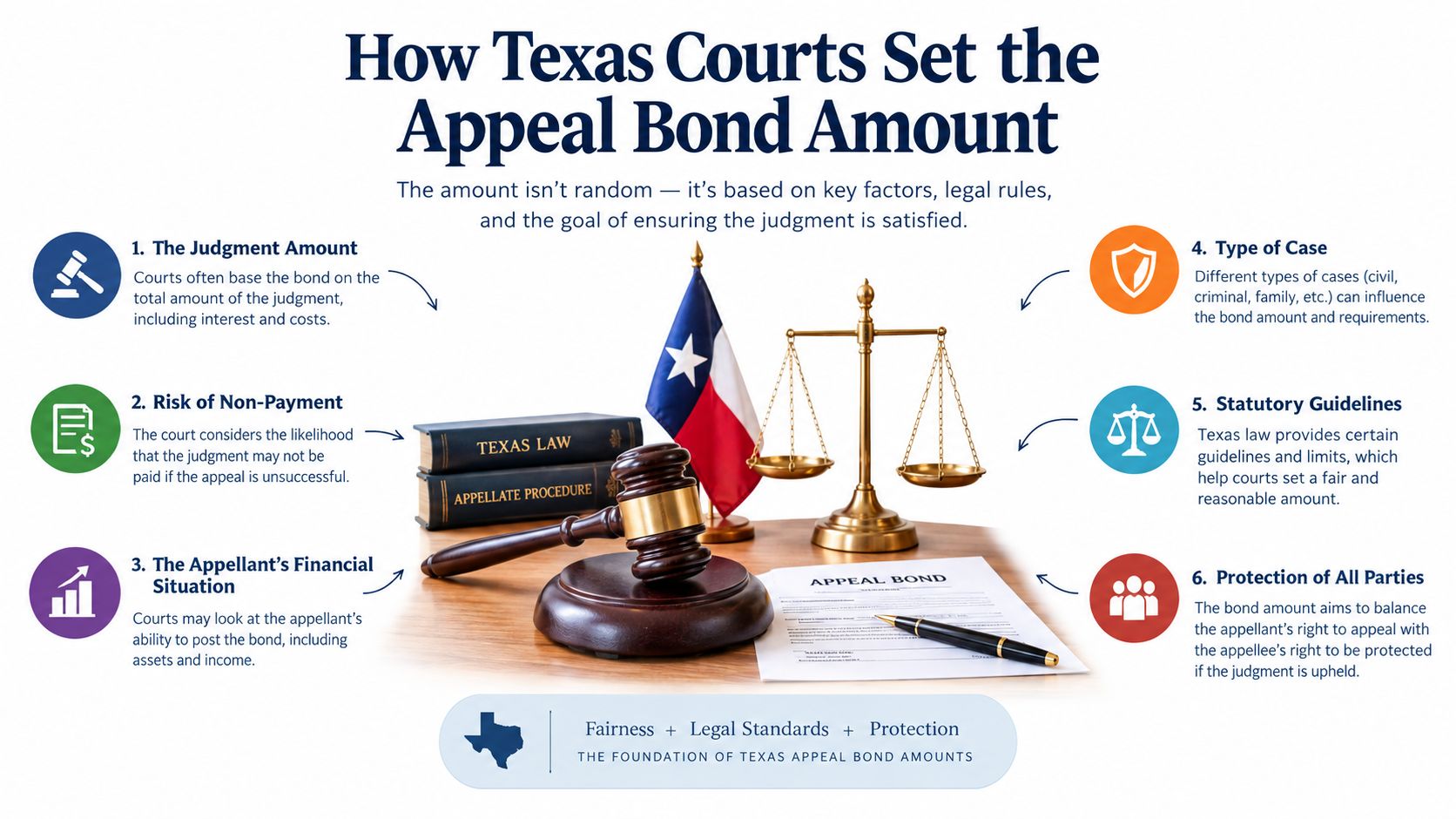
Why the judgment controls
The bond must state that you were convicted and have appealed. It must also require your personal appearance in the appellate court immediately if that court is in session, or at its next regular term if it isn't. The trial court must approve the bond before it becomes effective.
For a simple illustration, if twice the adjudged fine and court costs is more than the statutory floor, that higher figure controls. If the combined calculation is lower than the floor, the statutory minimum applies. The clerk should confirm the exact calculation from the signed judgment before you post anything.
The filing location matters too. In a justice or municipal court appeal, the bond is filed with the judge or justice who entered the judgment. A bond delivered to the wrong office, prepared without the required language, or presented without proper approval can create avoidable problems even when you acted quickly.
Don't assume courts use one formula
County- and district-court criminal appeals follow different procedures from justice- and municipal-court appeals. The same bond amount, form, and deadline shouldn't be assumed across courts. A person convicted in a county court may have an entirely different filing path from someone convicted in municipal court.
Ask the clerk to identify the required form, payable party, amount, approval process, and filing location. Then compare that information with the signed judgment and have counsel review it. The Texas DWI bail information can provide general context, but it can't replace court-specific confirmation of your appeal bond.
Filing and Posting Your DWI Appeal Bond
Begin with the signed judgment. It establishes the conviction, sentence, fine, costs, and court involved. From that document, calculate the applicable filing period under the rules for that court. Don't rely solely on a verbal date from memory, especially if the court entered judgment after a trial or ruled on a motion for new trial.
Next, contact the judge, justice, or clerk who handled the case and confirm the required bond form. The bond must identify the conviction and appeal, be payable to the State of Texas, include the appearance condition, and receive approval from the trial court. In a justice or municipal court matter, the bond must be filed with the judge or justice who entered the judgment.
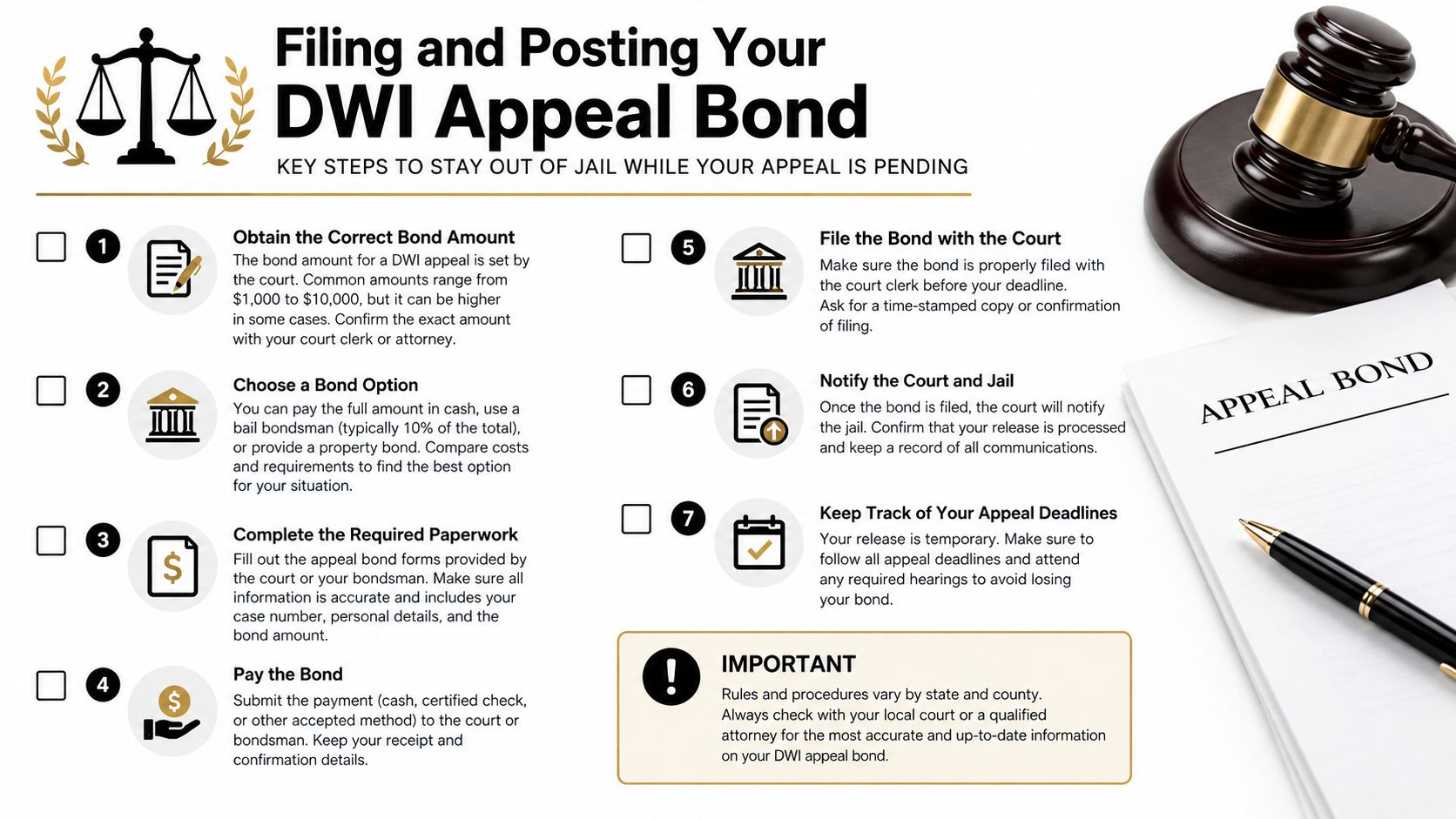
What to confirm before filing
You may be able to post the bond in cash or through a licensed surety, depending on the court's accepted procedures. The critical point is compliance. A properly prepared bond filed after the deadline won't solve the jurisdiction problem, and a timely document with the wrong amount or missing language may not perfect the appeal.
Use this practical checklist:
- Signed judgment: Obtain a complete copy showing the conviction, sentence, fine, and costs.
- Court identity: Confirm whether the conviction came from a municipal, justice, county, or district court.
- Deadline calculation: Determine the filing date from the judgment or the ruling on a motion for new trial, as applicable.
- Bond amount: Have the clerk confirm the calculation and required minimum.
- Required language: Verify the State of Texas payee, conviction details, appeal statement, and appearance condition.
- Approval: Confirm that the trial judge or justice must approve the bond.
- Filing proof: Keep a file-stamped copy, receipt, or other written evidence showing timely delivery.
What happens after a compliant filing
Once a compliant appeal bond is filed in a justice or municipal court matter, further proceedings in the originating court must stop. That does not end the case. The appeal moves through the appropriate appellate route, and the record, briefing, and legal issues still require attention.
Your lawyer may need to examine the judgment, clerk's record, reporter's record, motions, objections, jury instructions, and rulings. An appeal isn't a second opportunity to present every fact from the beginning. It is a focused review of preserved legal errors and the record created in the trial court.
What an Appeal Bond Does Not Fix
Posting an appeal bond doesn't automatically cancel a DPS suspension. The criminal appeal and the administrative license process are separate matters, and each has its own deadline, filing requirements, and potential remedies.
Administrative License Revocation, or ALR, is a civil process administered by the Texas Department of Public Safety. DPS may seek suspension or disqualification when a driver refuses or fails to complete a blood or breath test, or when testing shows a BAC of at least 0.08% for a noncommercial vehicle or 0.04% for a commercial motor vehicle. BAC means blood alcohol concentration. The DPS ALR program explains that a driver generally has only 15 days after receiving the suspension notice to request an ALR hearing.
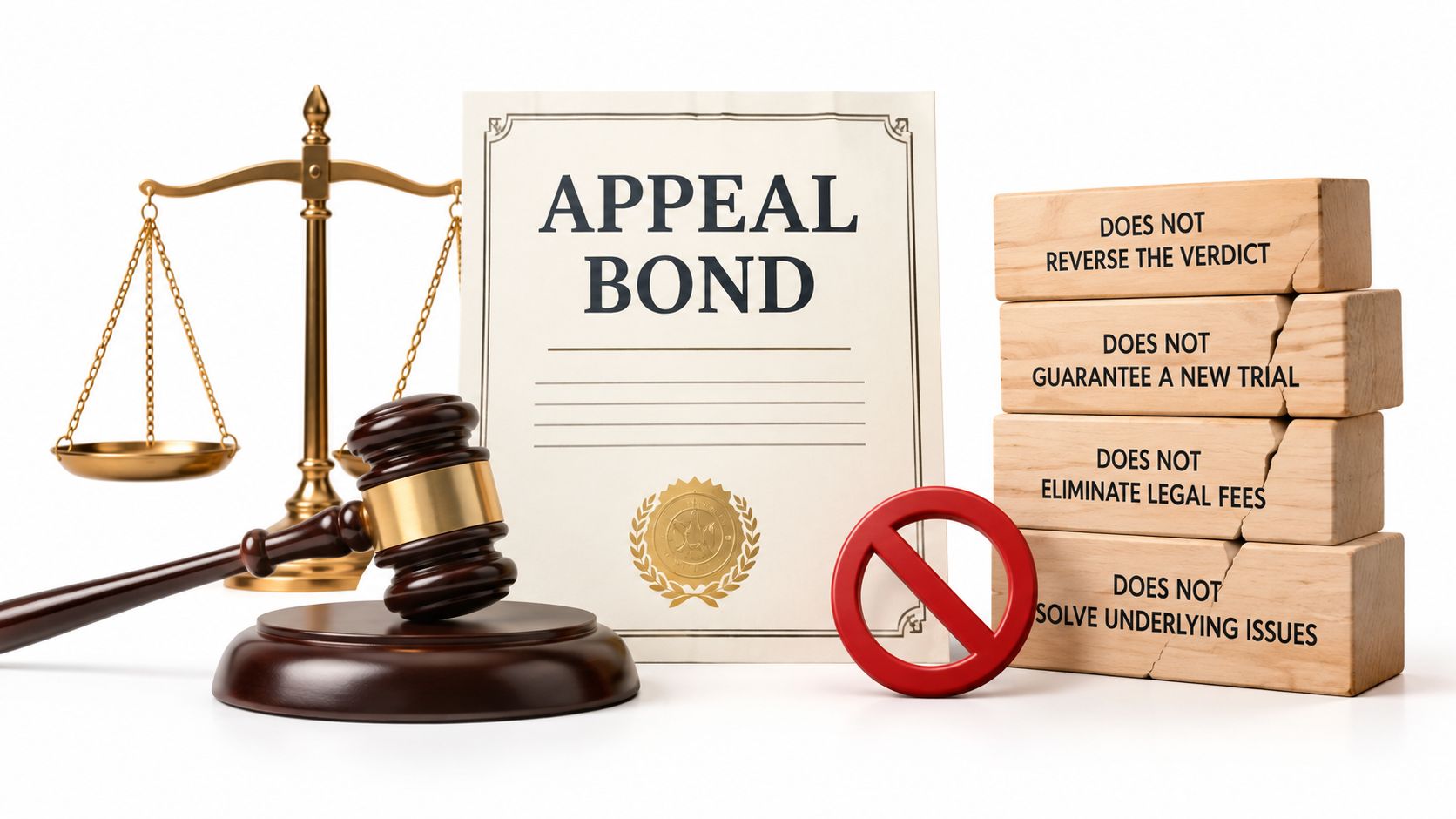
Four separate issues deserve attention
A post-conviction plan should distinguish between the appeal and collateral consequences:
- Criminal appeal: Timely file the required notice and appeal bond so the appellate court can review the case.
- Release conditions: Determine whether the sentence is suspended or execution has begun, then request and document reasonable bail conditions.
- ALR response: Track the DPS notice and request an ALR hearing within the applicable period.
- Driving restrictions: Address an occupational driver's license, ignition-interlock requirements, commercial-driver restrictions, and professional licensing separately.
An occupational driver's license may provide limited driving privileges for essential needs such as work, school, or household responsibilities, if you meet the applicable requirements. It doesn't erase the suspension or expand your driving privileges beyond the court's order. The firm's Texas occupational driver's license resource discusses this separate license issue.
The same caution applies to repeat cases
A first DWI in Texas and a repeat DWI can present different sentencing and licensing concerns. A second offense may create additional consequences that an appeal bond alone won't resolve. Review the Texas second-offense DWI information if another DWI appears in your record, but have counsel apply the law to your specific judgment.
A motion for new trial may also affect the appellate deadline and the issues preserved for review. It is a separate litigation decision, not an automatic extension. The motion for new trial after a Texas DWI conviction should be evaluated promptly with the appeal bond and sentence.
Getting Help With Your DWI Appeal Before the Clock Runs Out
Start with three facts: the date sentence was rendered, the court that entered the conviction, and whether a motion for new trial was filed. Then identify the issues you believe require review. Those may include probable cause for the stop or arrest, the reliability and administration of a field sobriety test, breath or blood testing, evidentiary rulings, jury instructions, or other trial errors.
Your lawyer needs more than your memory of the hearing. The signed judgment, clerk's record, reporter's record, exhibits, motions, and rulings can determine what an appellate court is able to consider. Early review also gives counsel time to verify the bond amount, secure approval, and preserve proof of timely filing.
A focused review can answer the immediate questions
A useful consultation should address:
- Time remaining: How is the deadline calculated from the judgment or motion ruling?
- Correct court: Which judge, justice, clerk, or appellate court receives each filing?
- Bond compliance: Does the document state the required information and appearance condition?
- Release status: Is punishment suspended, or has execution begun?
- Driving consequences: Does the case involve an ALR notice, ignition interlock, occupational licensing, or CDL restrictions?
- Appeal issues: Does the record show a preserved legal error that warrants appellate review?
The Law Office of Bryan Fagan, PLLC serves clients in Houston, Dallas–Fort Worth, Austin, San Antonio, and surrounding counties. Its DWI practice includes chemical-test challenges, field sobriety issues, ALR hearings, criminal trials, first-time and repeat DWI defense, felony cases, and post-conviction matters. A free consultation can help you understand which deadlines apply and what documents counsel needs immediately.
You don't need to decide the entire future of your case before seeking advice. You do need to act before a deadline passes. A Texas DUI attorney can separate the appeal bond from the DPS process, identify the proper court procedure, and help protect your opportunity for review.
The Law Office of Bryan Fagan, PLLC offers free consultations and 24/7 support for Texans facing DWI convictions, appeal-bond deadlines, ALR proceedings, and related license consequences. Visit Law Office of Bryan Fagan, PLLC to request a case evaluation and discuss the next step with a Texas defense team.
