 Skip to content
A DWI plea hearing is an important stage in a criminal case because it is often the point where a negotiated agreement becomes an official court judgment. For someone charged with driving while intoxicated, the hearing may feel surprisingly brief compared with the months of negotiations, evidence review, court appearances, and uncertainty that came before it.
Still, a short hearing should not be mistaken for an unimportant one. The judge may ask questions about the plea, review documents, discuss constitutional rights, consider the negotiated recommendation, and ultimately impose a sentence. Once the court accepts a plea, reversing course can become much more difficult.
The decisions made during this proceeding may affect probation requirements, fines, driving privileges, and other consequences that continue long after the defendant leaves the courtroom. Understanding those potential outcomes beforehand can make the process less confusing and help the defendant recognize the significance of each question the judge asks.
Understanding what happens during a DWI plea hearing can therefore help defendants approach the proceeding with realistic expectations. The exact procedure varies depending on the court, the charge, the plea agreement, and the circumstances of the case, but several fundamental issues commonly arise.

Understanding the Purpose of a DWI Plea Hearing
A DWI plea hearing allows the court to formally address a defendant’s decision to resolve the criminal charge through a plea rather than continue toward trial.
Before the hearing, the defense attorney and prosecutor may have spent considerable time discussing the case. Those discussions can involve police reports, body-camera footage, field sobriety testing, breath or blood evidence, criminal history, potential defenses, and possible sentencing terms.
Eventually, the parties may reach an agreement. The DWI plea hearing is where that agreement moves from negotiation into the courtroom.
The judge does not merely observe the process. The court has responsibilities of its own, including determining whether the plea can legally be accepted and ensuring that the defendant understands important consequences associated with the decision.
Is Every DWI Plea Hearing the Same?
No. Two people charged with DWI may have very different plea hearings.
One defendant may be dealing with a first offense and a relatively straightforward negotiated resolution. Another may face enhanced allegations, prior convictions, an accident, a high alcohol concentration allegation, or other circumstances affecting the case.
Local court procedures can also differ. For that reason, defendants should rely on their attorney for instructions about the particular court handling their case rather than assuming that another person’s experience will precisely match their own.
What Happens Before the DWI Plea Hearing?
Much of the important work occurs before anyone approaches the judge.
A defense attorney will generally want to understand the prosecution’s evidence before advising a client about a plea. That review may involve examining the traffic stop, the officer’s observations, field sobriety exercises, statements attributed to the defendant, breath or blood testing, warrants, laboratory information, video evidence, and other available materials.
The defense can then evaluate the strengths and weaknesses of the case. A plea offer should be considered in that context.
Reviewing the Plea Agreement
Before the DWI plea hearing, the defendant should understand what the proposed agreement actually requires.
The agreement may address matters such as the recommended sentence, fine, probation conditions, required programs, community service, or other legally permitted terms.
A defendant should not assume that a plea agreement means simply paying a fine and leaving the courthouse. DWI cases can carry consequences extending beyond the immediate courtroom proceeding.
Understanding the complete agreement before entering court helps prevent unpleasant surprises when the judge begins asking questions.
Arriving at Court for a DWI Plea Hearing
Courtroom preparation may seem basic, but it matters.
A defendant should know when and where to appear and should allow enough time for courthouse security, parking, locating the courtroom, and communicating with counsel.
Professional behavior is also important. The courtroom is a formal environment, and the judge will observe how people conduct themselves.
Defendants should avoid interrupting court personnel, arguing with the prosecutor, or discussing sensitive case details loudly in public areas. Phones should be silenced according to courthouse rules.
When the case is called, the attorney typically guides the defendant through the next steps.
The Judge’s Role During the Hearing
The judge occupies a central position in the DWI plea hearing.
The prosecutor and defense may have negotiated an agreement, but the court still must perform its judicial responsibilities.
Depending on the type of plea and applicable procedures, the judge may review paperwork, ask the defendant questions, confirm that rights are understood, address the plea itself, and pronounce the sentence.
This is one reason defendants should listen carefully. The hearing is not simply a ceremonial signature session. Statements made in court can have legal significance.
Why the Judge Asks Questions
Defendants sometimes become nervous when the judge asks direct questions. That does not necessarily mean something has gone wrong.
The court may need to establish that the defendant understands the proceeding and is making the plea knowingly and voluntarily.
Questions may concern whether the defendant discussed the case with counsel, understands the charge, understands certain rights, and wishes to proceed with the plea.
The defendant should answer truthfully and directly. If something is unclear, the defendant should not pretend to understand merely because the courtroom feels rushed.
Rights Addressed at a DWI Plea Hearing
A criminal defendant has significant constitutional and procedural rights.
Resolving a DWI charge through a guilty or no-contest plea can involve giving up important trial-related rights. Those rights can include the right to a trial, the right to confront and cross-examine prosecution witnesses, and the right against compelled self-incrimination.
The precise admonishments and paperwork depend on the circumstances. The larger point is that entering a plea has legal consequences.
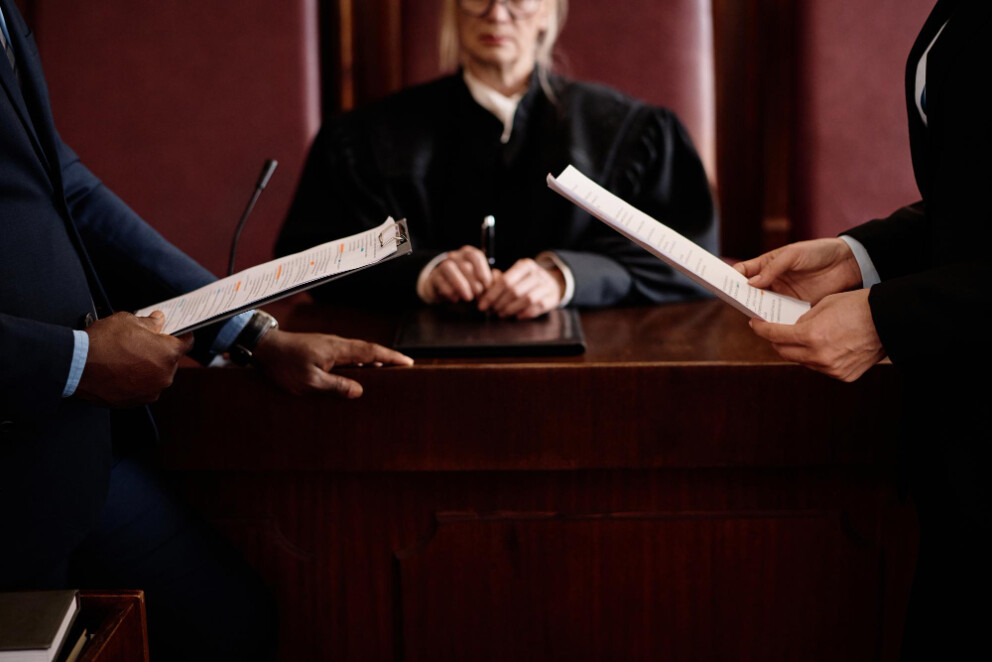
Why Understanding the Waiver Matters
Imagine a defendant named Eric.
Eric has been attending court settings for several months and wants the case finished. His attorney presents a negotiated offer that appears manageable.
Eric might be tempted to sign everything quickly simply because he is tired of dealing with the case. But exhaustion is not a substitute for understanding.
Before the DWI plea hearing concludes, Eric should know what plea he is entering, what rights are affected, and what sentence or conditions he may face.
Taking a few additional minutes to ask a question before the plea can be far more useful than discovering a misunderstanding afterward.
Guilty and No-Contest Pleas
A DWI plea hearing may involve a guilty plea or, where legally available and appropriate, a plea of no contest, also called nolo contendere.
The terms should not be treated casually.
A guilty plea represents an admission of guilt to the criminal charge. A no-contest plea means the defendant does not contest the charge, although its legal effect in the criminal proceeding can resemble a guilty plea in important respects.
The appropriate choice depends on the case and legal advice provided to the defendant.
Simply hearing that someone else entered a particular plea in another DWI case does not mean the same approach makes sense in every situation.
Evidence and the DWI Plea Hearing
A negotiated plea usually does not look like a full criminal trial.
The prosecution generally does not need to present witnesses one after another while the defense conducts lengthy cross-examinations as it would during a contested trial.
However, evidentiary and factual requirements can still matter.
Depending on the procedure used, the court may review stipulated evidence, written materials, or other information supporting the proceeding.
Defendants should understand any documents they are asked to approve or sign.
Written Plea Documents Matter
A large portion of a DWI plea hearing may involve paperwork prepared before the case is called.
Those documents should not be viewed as meaningless formalities.
They may contain admonishments, waivers, representations, agreements, or other legally significant information.
A defendant should review them with counsel and raise questions before signing. The fact that a form appears frequently in criminal court does not make its contents unimportant to the person signing it.
Will the Judge Accept the Plea Agreement?
Defendants sometimes assume that an agreement between the prosecutor and defense automatically binds the judge.
That assumption can be dangerous.
The court’s authority and the effect of a plea bargain depend on the applicable procedure and circumstances.
The judge may review the proposed resolution and determine how to proceed under Texas law.
The defendant should therefore understand what happens if the court does not follow a negotiated recommendation.
That issue should be discussed with counsel before entering the plea rather than discovered unexpectedly during the hearing.
Sentencing During a DWI Plea Hearing
If the court accepts the plea and proceeds to sentencing, the judge may announce the sentence and relevant conditions.
The sentence depends on the offense, applicable punishment range, plea arrangement, criminal history, case facts, and other legally relevant considerations.
Possible consequences in a DWI case can include fines, confinement, probation-related requirements, education or intervention programs, community service, and other conditions where authorized.
Certain cases may also involve ignition interlock requirements or other restrictions.
The defendant should understand not only the headline sentence but also the practical obligations that follow.
Probation Conditions After a DWI Plea
When a negotiated resolution includes community supervision, the DWI plea hearing may mark the beginning rather than the end of the defendant’s responsibilities.
Probation can contain numerous conditions.
The defendant may need to report as directed, complete required programs, avoid prohibited conduct, submit to testing where required, pay specified fees, or satisfy other court-ordered obligations.
Missing a requirement can create additional legal problems.
For example, a defendant who hears “probation” and assumes that means simply staying out of trouble may overlook reporting dates or required classes.
Carefully reviewing every condition reduces that risk.
Ignition Interlock and Driving-Related Issues
DWI cases naturally create concerns about driving.
Depending on the case, ignition interlock requirements or driver’s-license consequences may become relevant.
However, defendants should not assume that every license-related issue is completely resolved at the DWI plea hearing.
The criminal case and administrative driver’s-license matters can involve distinct procedures.
A person may therefore need to understand both the court’s orders and any separate licensing consequences.
This distinction is especially important for someone who relies on driving for work, childcare, school, or medical appointments.
What Should a Defendant Say During the Hearing?
Many defendants worry that they will be expected to deliver a long speech.
Usually, the better approach is much simpler.
Listen carefully, answer the judge’s questions truthfully, speak clearly, and do not interrupt.
If the judge asks whether you understand something and you genuinely do not, say so.
Trying to guess the answer the court wants can create unnecessary confusion.
A DWI plea hearing concerns a legally significant decision, so accuracy matters more than speed.
Avoid Casual Courtroom Language
The defendant should remember that a court reporter or electronic system may create a record of the proceeding.
Jokes, sarcastic remarks, arguments, or careless statements can therefore be particularly inappropriate.
Respectful communication keeps attention on the legal issues that actually matter.
A Typical DWI Plea Hearing Example
Consider a fictional defendant named Marcus who is charged with DWI.
His attorney reviews the police video, offense report, laboratory information, and other evidence. After negotiations, the prosecution extends a plea offer.
Marcus discusses the potential benefits and disadvantages with his attorney and decides to accept the negotiated resolution.
On the hearing date, Marcus arrives early. His attorney reviews the paperwork with him before the case is called. They discuss the plea, recommended sentence, conditions, and rights addressed in the documents.
When the judge calls the case, Marcus and his attorney approach. The judge identifies the charge, addresses the plea, and asks Marcus several questions to confirm that he understands what he is doing.
After completing the required procedure, the court accepts the plea and announces the sentence. Marcus then receives instructions about his obligations after court.
The hearing itself may take considerably less time than the negotiations that produced it. Its legal importance, however, is substantial.

Can a Defendant Change Their Mind?
A defendant who has doubts about accepting a plea should raise them with counsel before the plea is finalized.
The ability to withdraw a plea can depend heavily on timing and procedural circumstances.
It is much safer to resolve uncertainty before the court accepts the plea than to assume the decision can easily be undone afterward.
A defendant should never enter a plea simply because they feel embarrassed about asking additional questions.
The consequences can last much longer than the hearing.
What Happens Immediately After the DWI Plea Hearing?
Leaving the courtroom does not necessarily mean every responsibility connected with the case has ended.
The defendant may need to meet with probation personnel, arrange payments, enroll in required programs, address ignition interlock obligations, or follow other instructions.
Deadlines matter.
A defendant should leave court knowing what must happen next and when.
Keeping copies of the judgment, conditions, receipts, program enrollment documents, and other relevant paperwork can also help prevent confusion later.
Common Mistakes During the DWI Plea Process
Several avoidable mistakes can make the process more difficult.
One is accepting an offer without understanding all of its conditions. Another is focusing only on the immediate fine while ignoring longer-term requirements.
Defendants may also misunderstand driver’s-license consequences or assume that probation requires no active participation.
Other problems arise when people arrive late, fail to communicate with counsel, or sign documents without reading them.
Preparation does not guarantee a particular outcome, but it can help a defendant make informed decisions.
Why Legal Advice Matters Before Entering a DWI Plea
A plea decision should be based on the actual evidence and circumstances of the case.
A defendant may look at the prosecution’s offer and immediately think it is either excellent or terrible. Neither conclusion can be evaluated properly without context.
The strength of the state’s evidence matters. Potential suppression issues may matter. Video evidence may matter. Testing procedures may matter.
Prior criminal history and possible sentencing exposure may also matter.
An attorney can evaluate these factors and explain how a proposed resolution compares with the risks and alternatives.
The ultimate plea decision belongs to the defendant, but informed legal advice can make that decision far more meaningful.
Preparing for a DWI Plea Hearing
Preparation should begin before the defendant enters the courtroom.
The defendant should understand the plea being offered, the anticipated sentence, major conditions, financial obligations, and immediate responsibilities following the hearing.
Questions worth resolving with counsel beforehand may include:
- What plea am I entering?
- What sentence is being recommended?
- What conditions will apply?
- Are there programs or classes I must complete?
- What happens with my driver’s license?
- Could an ignition interlock requirement apply?
- What happens if the judge does not follow the anticipated agreement?
- What must I do immediately after court?
Knowing these answers can make the hearing considerably less confusing.
The DWI Plea Hearing Is More Than a Formality
It is easy to underestimate a hearing that may last only a relatively short time.
Yet the DWI plea hearing can resolve a criminal charge and establish obligations that continue well beyond the day in court.
The defendant may waive significant trial rights. The court may enter a judgment. Sentencing conditions may begin.
Probation obligations, financial requirements, treatment programs, or driving-related restrictions may follow.
The brevity of the hearing therefore says very little about its importance.

Final Thoughts on a DWI Plea Hearing
A DWI plea hearing is often the final courtroom stage of a negotiated DWI resolution, but it represents much more than simply telling a judge that an agreement has been reached.
The proceeding allows the court to address the defendant’s plea, important rights, relevant documents, the negotiated resolution, and sentencing. What happens afterward can include probation requirements, financial obligations, educational programs, ignition interlock conditions, or other consequences depending on the particular case.
The most important preparation happens before the defendant stands in front of the judge. Reviewing the evidence, understanding the plea agreement, discussing alternatives with counsel, and knowing exactly what obligations will follow can reduce uncertainty and help prevent avoidable misunderstandings.
Every DWI case has its own facts. A plea that makes sense in one case may make little sense in another. Understanding the DWI plea hearing as a meaningful legal decision rather than a routine courtroom formality helps defendants approach the process with greater clarity and a better understanding of what comes next.

